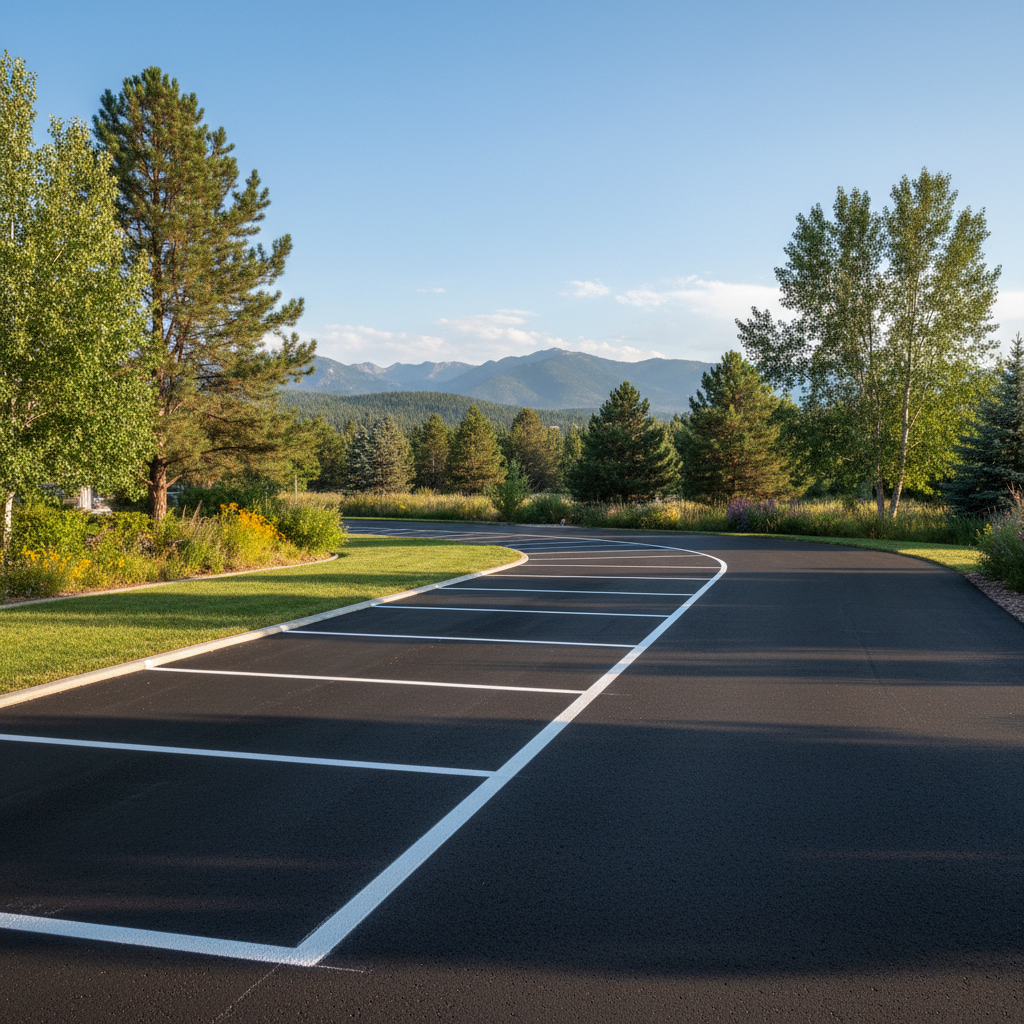
Alright, let's talk about asphalt striping. You'd think it's a pretty straightforward thing, right? Just paint some lines. But I've seen enough botched jobs and frustrated homeowners around Longmont to tell you there's a lot more to it than just a can of paint and a roller. If you're planning on getting your driveway, parking lot, or even a basketball court striped, you need to be smart about it. Here are the biggest blunders I see people make, and how you can steer clear of them.
Mistake #1: Thinking All Paint is the Same
This is a big one. You might see a quote that's way cheaper than others and think you've found a deal. Chances are, that low price comes from using cheap, low-grade paint. There's a huge difference between standard traffic paint and the high-quality, durable stuff that's meant to stand up to our Colorado sun, snow, and the freeze-thaw cycles we get here. Good traffic paint is formulated to be abrasion-resistant, fade-resistant, and to dry quickly so it doesn't track. Cheap paint will chip, peel, and fade in a fraction of the time. You'll be re-striping much sooner, which means you didn't save money at all, you just spent it twice.
Mistake #2: Not Prepping the Surface Properly
You can have the best paint in the world, but if the surface isn't ready, it's all for nothing. The asphalt needs to be clean, dry, and free of loose debris, dirt, oil, or existing peeling paint. I've seen folks try to stripe right over a dusty, gravelly surface. It's like trying to paint a greasy pan – it just won't stick. A professional will sweep, blow, and often even power wash the area, making sure it's pristine before a single drop of paint goes down. If your contractor isn't talking about surface prep, that's a red flag.
Mistake #3: Ignoring the Weather (Especially in Longmont)
Our weather here in Longmont can be a bit unpredictable, especially in the spring and fall. Striping paint needs specific conditions to cure properly. Too cold, and it won't set. Too hot, and it can dry too fast, leading to cracking. Rain, obviously, is a no-go. Humidity also plays a role. A good contractor knows the ideal temperature range and humidity levels for the specific paint they're using. They'll schedule the job when the forecast looks good, and they won't rush it if conditions aren't right. Trying to squeeze a job in during a cold snap or right before a rainstorm is a recipe for disaster.
Mistake #4: Not Understanding Layout and Regulations
This applies more to commercial parking lots or multi-unit residential properties, but even for a large personal driveway, layout matters. Are the parking spaces wide enough? Are there ADA-compliant spaces with proper access aisles? Are fire lanes clearly marked and kept clear? For businesses, there are often local codes and ADA requirements you have to meet. You don't want to get a fine because your parking lot isn't up to snuff. A reputable striping company like Integrity Paving will know these regulations and help you design a layout that's both functional and compliant. We've done plenty of work in areas like Prospect New Town, and you learn what works and what doesn't for different property types.
Mistake #5: Hiring the Cheapest Bid Without Asking Questions
Look, I get it. Everyone wants to save a buck. But when it comes to asphalt work, the cheapest bid is often the most expensive in the long run. If a price seems too good to be true, it probably is. Don't just look at the bottom line. Ask questions:
- What type of paint do you use? (Ask for specifics, like manufacturer and product name)
- How do you prepare the surface?
- What's your warranty on the striping?
- How long have you been doing this type of work?
- Can you provide references?
- Are you insured and licensed?
A legitimate, experienced contractor won't hesitate to answer these questions. Someone who's cutting corners will often be vague or get defensive.
Mistake #6: Not Protecting Fresh Stripes
Once the striping is done, it's not instantly bulletproof. The paint needs time to cure completely. This usually means keeping vehicles off it for a certain period, often 24-48 hours, depending on the paint and weather conditions. If you or your tenants drive over fresh stripes, you'll track paint, smudge lines, and ruin the clean look. A good contractor will advise you on the necessary cure time and might even put up temporary barriers or cones to help protect the new work.
Getting your asphalt striped can really refresh the look of your property and improve safety and organization. Just make sure you're going into it with your eyes open, asking the right questions, and choosing a contractor who knows their stuff. It'll save you a lot of headaches and money down the road.