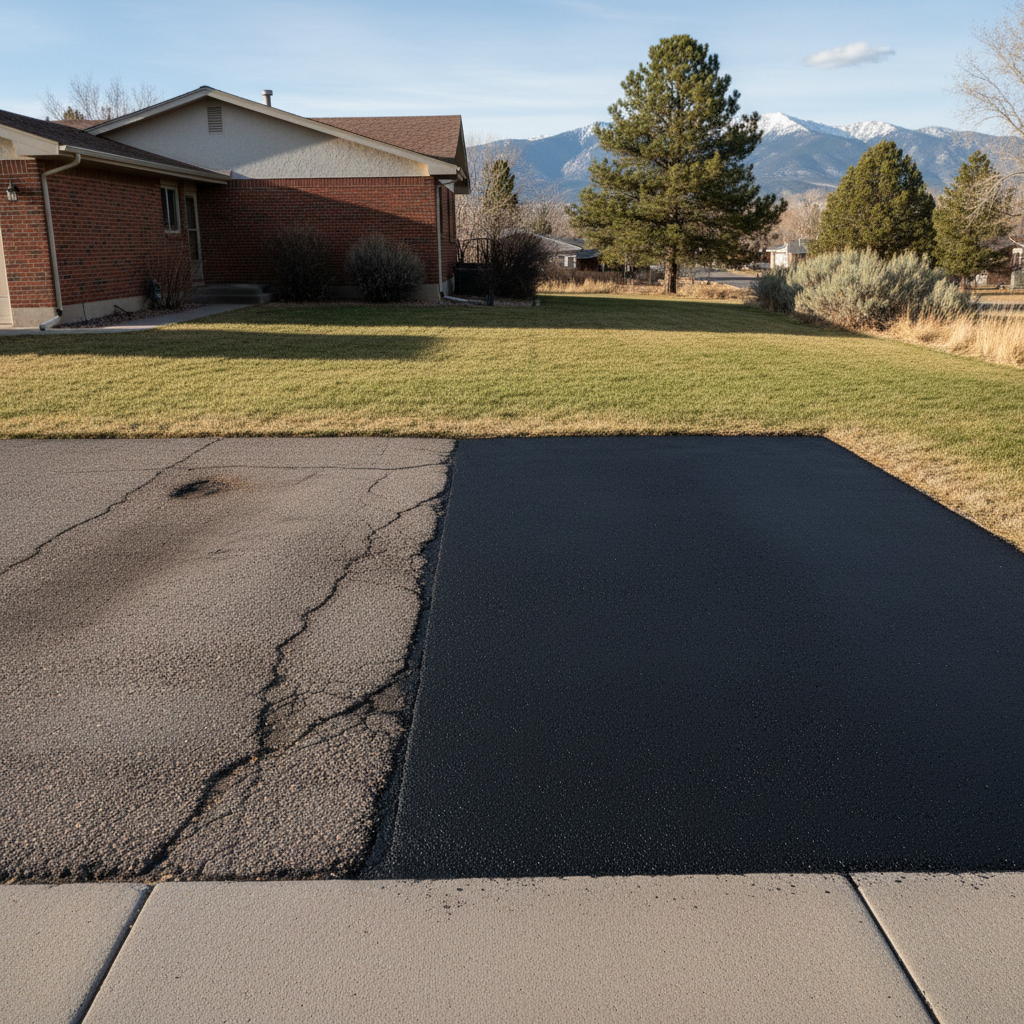
You're looking at getting your asphalt driveway or parking lot slurry coated, which is a smart move to protect your investment. But then you hear about 'single pass' and 'double pass' applications, and suddenly it's not as simple as you thought. What's the difference? Which one's right for your property here in Longmont?
I've been doing this a long time, and I've seen firsthand what works and what doesn't in our Colorado climate. Let's talk about these two approaches honestly, so you know what you're getting into.
What's the Deal with Slurry Coating Anyway?
First, a quick refresher. Slurry coating is a mix of asphalt emulsion, aggregate (fine sand or slag), water, and some additives. It's not the same as sealcoating, which is usually just a thin layer of asphalt emulsion. Slurry is thicker, has more body, and it's designed to fill small cracks, improve skid resistance, and give your pavement a fresh, uniform black look. It's a great way to extend the life of your asphalt, especially if it's starting to show its age with some minor surface wear.
Single Pass Slurry: Quick and Cost-Effective
A single pass application is exactly what it sounds like: we apply one layer of the slurry mix over your existing asphalt. It's the faster option, and generally, it's going to be less expensive upfront. Think of it like putting one good coat of paint on a wall. It covers the surface, protects it, and makes it look a lot better than it did before.
Pros of Single Pass:
- Lower Initial Cost: You're paying for less material and less labor time.
- Faster Application: We can get in and out quicker, which means less disruption for you.
- Good for Well-Maintained Pavement: If your asphalt is in pretty good shape, with only minor surface oxidation and very few small cracks, a single pass can be perfectly adequate to refresh and protect it.
Cons of Single Pass:
- Less Durability: It's a thinner layer, so it won't stand up to heavy traffic or our harsh Longmont winters quite as long as a double pass. The freeze-thaw cycles we get can be tough on any pavement.
- Limited Crack Filling: While it fills tiny hairline cracks, it won't do much for anything more significant.
- Shorter Lifespan: You'll likely need to reapply sooner than with a double pass.
Double Pass Slurry: The Robust Option
With a double pass, we apply one layer of slurry, let it cure for a short period (usually a few hours, depending on conditions), and then come back and apply a second, identical layer. This isn't just about putting on more of the same; it's about building up a more substantial, protective surface.
Pros of Double Pass:
- Superior Durability: Two layers create a much thicker, more resilient surface. This is especially beneficial for areas with higher traffic or if your asphalt is a bit older and needs more help. It handles the sun, snow, and general wear and tear of a Longmont neighborhood like Prospect better.
- Better Crack Filling: The two layers do a much better job of filling and bridging small to medium cracks, giving you a smoother, more uniform finish.
- Longer Lifespan: You'll get more years out of a double pass application before needing to re-coat. This often makes it more cost-effective in the long run, even with the higher initial investment.
- Enhanced Appearance: The double layer often results in a deeper, richer black color and a more uniform texture.
Cons of Double Pass:
- Higher Initial Cost: More material, more labor, more time. It's going to cost you more upfront.
- Longer Application Time: We need to wait between coats, so the whole process takes longer, meaning your driveway might be out of commission for a bit longer.
My Recommendation for Longmont Homeowners
Given the conditions we deal with here in Longmont – the intense summer sun, the snow and ice, the freeze-thaw cycles, and even the expansive clay soils in some areas that can put stress on pavement – I almost always recommend a double pass slurry application for residential driveways and most commercial parking lots.
While the single pass is cheaper upfront, the longevity and enhanced protection of a double pass usually make it the better value over time. You're getting a much more robust surface that will stand up to our local weather patterns better, and you won't have to think about re-coating as often.
Think of it as an investment. You want your asphalt to last, and a double pass gives you that extra layer of confidence and protection. Integrity Paving always aims to give you the best bang for your buck, and in most cases, that means doing it right the first time with a double pass.
Of course, every driveway is different. If you want to talk specifics about your property, give us a call. We'll come out, take a look, and give you an honest assessment of what we think is best.