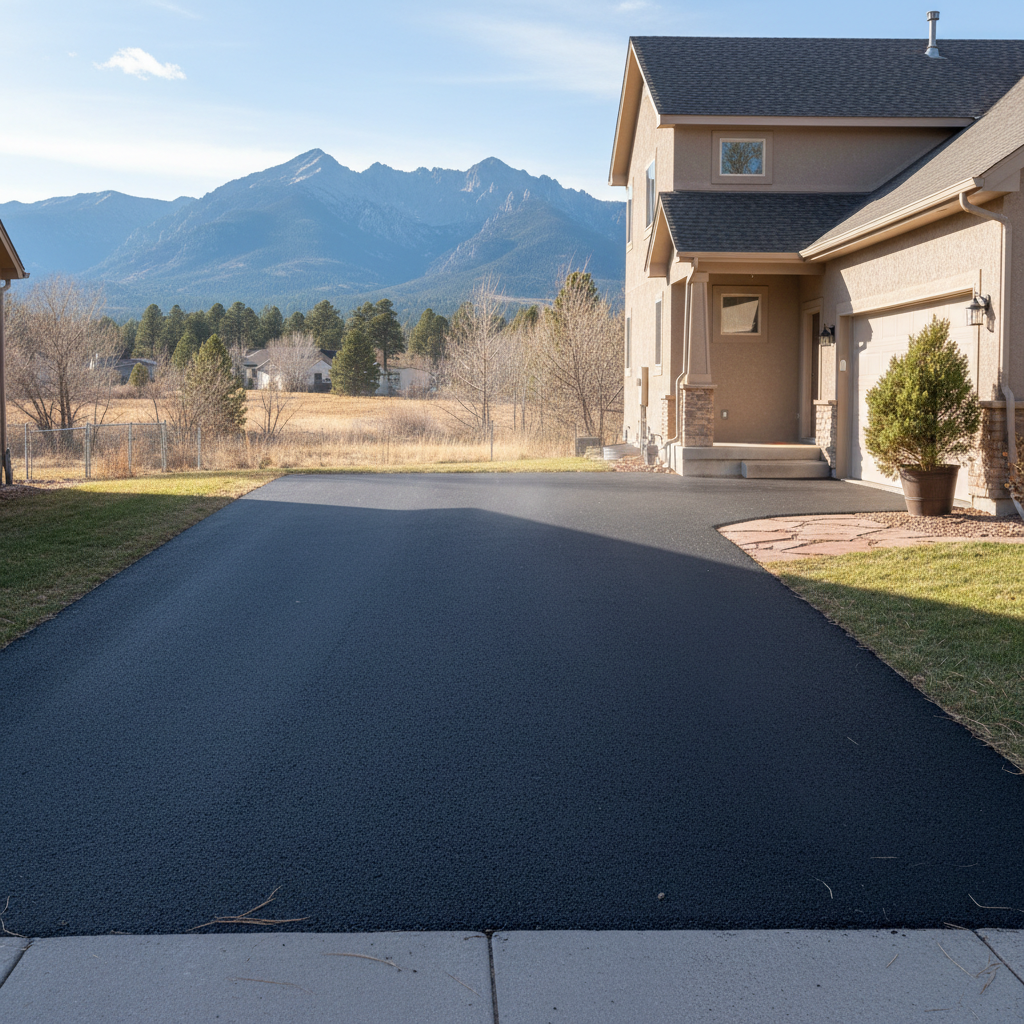
Alright, let's talk about getting a new driveway. It's a big investment, and nobody wants to feel like they're just guessing on the price. You want to know what you're getting into, right? I get it. I've been doing this for years here in Longmont, and I've seen all kinds of driveways, from small residential ones in Old Town to sprawling country properties out past Hygiene.
What Really Drives the Price Tag?
When you're looking at a new driveway, a few things really push the cost up or down. It's not just about the square footage, though that's a big part of it.
- Size and Shape: This is obvious, but a bigger driveway means more material and more labor. A simple rectangle is cheaper per square foot than a curvy, winding driveway with lots of cutouts. Every extra corner or curve adds time and complexity.
- Material Choice: Asphalt is generally the most common and cost-effective option around here. Concrete is usually more expensive upfront, sometimes 50-100% more, but it can last longer if installed right. For this post, I'm focusing mostly on asphalt, since that's what most folks ask us about at Integrity Paving.
- Site Prep: This is huge. If your current driveway is a mess – cracked, uneven, poor drainage – we might need to do a lot of excavation, grading, and adding a new base layer. If it's a new installation on virgin soil, especially with Longmont's clay-heavy soils, we'll need to ensure proper compaction and a good aggregate base. Sometimes, you'll need to remove old concrete or asphalt, and that demo and haul-away adds to the bill.
- Thickness: A standard residential driveway might get 2-3 inches of asphalt on top of a well-prepared base. If you've got heavy vehicles, like an RV or a work truck, you might want 3-4 inches, which naturally costs more due to the extra material.
- Drainage: Good drainage is critical. If we need to install culverts, catch basins, or extensive grading to direct water away from your house and foundation, that'll be an additional cost. Trust me, it's worth it to avoid future headaches.
- Accessibility: If your property is hard to get to with heavy equipment, or if we need to work around tight spaces, that can add to labor time and therefore the cost.
Typical Cost Ranges for a New Asphalt Driveway
Okay, let's get down to some numbers. Again, these are averages for Longmont and the surrounding areas, and they can fluctuate with material costs and demand.
For a standard asphalt driveway, you're generally looking at anywhere from $3.00 to $7.00 per square foot. That's a pretty wide range, I know, but it accounts for all those factors I just mentioned.
- Basic Overlay: If your existing asphalt is in decent shape and just needs a fresh layer, you might be on the lower end, say $2.50 - $4.00 per square foot. This usually means minimal prep, maybe just patching some cracks before the new layer goes down.
- Full Depth Replacement: This is when we tear out the old stuff, re-grade, lay down a new aggregate base, and then put down fresh asphalt. This is where you'll see prices in the $4.50 - $7.00+ per square foot range. This is often necessary if your driveway has major structural issues, significant heaving from frost, or poor drainage.
So, for a typical two-car driveway, let's say 400 square feet (10x40 feet), you could be looking at anywhere from $1,200 for a simple overlay to $2,800 for a full replacement. A larger, more complex driveway, maybe 1,000 square feet, could run you $4,500 to $7,000 or more for a full tear-out and replace.
What Should a Quote Include?
When you get a quote from a reputable company like Integrity Paving, it shouldn't just be a single number. You want a breakdown. Here's what I always make sure to include:
- Scope of Work: Clearly states what's being done – e.g.,